
One seat build
Agree a single configuration for agent seats, with variants only for supervisors and quality analysts, so spares fit every desk.
Desktops · monitors · components · UPS
Price Beat Promise: show us a lower written quote
Part numbers matched before you pay
For contact centres, BPO and shared-service floors
A contact centre floor is a fleet of identical seats that all have to work at the start of every shift. We source the desktops or thin clients, monitors, USB headsets and webcams, and the UPS that carries them through power cuts, for in-house service teams and outsourcing providers in Africa and the Gulf, quoted seat by seat and shipped as one consignment.
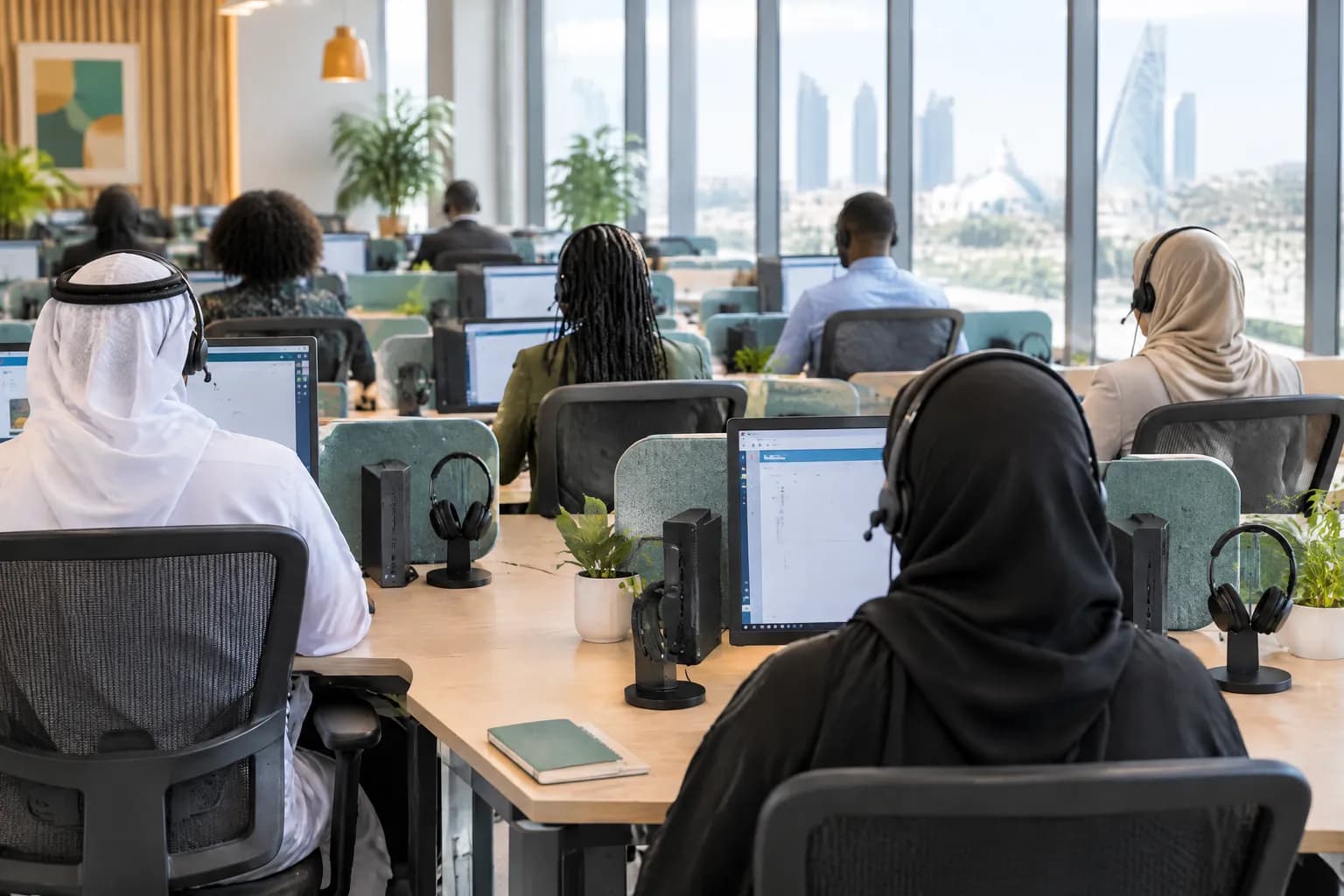
Every seat on a contact centre floor does nearly the same job, all day, often across two or three shifts. That makes standardisation the most valuable decision you can take: one seat build, one image, one headset model and one set of spares, so a failed seat is swapped from the spare pool in minutes and agents never wait for a technician.
The first choice is where the desktop runs. Floors built on Citrix, Azure Virtual Desktop or a similar platform suit thin clients, which draw little power and keep customer data off the desk. Floors that run a softphone and CRM locally need business desktops or mini PCs with enough memory for a browser, a telephony client and video calls at once. Supervisors and quality teams often need a larger or second monitor either way.
Headsets deserve as much thought as the computers. Agents wear them for hours, so comfort, a noise-cancelling microphone and compatibility with your telephony or contact-centre platform matter more than extra features. Power is the last piece: a UPS that keeps the seats, switches and router running through a changeover saves calls that would otherwise drop mid-sentence.
Agree these at the start and the floor can be equipped, expanded and repaired without surprises.
Agree a single configuration for agent seats, with variants only for supervisors and quality analysts, so spares fit every desk.
Thin clients for virtual desktop floors, desktops or mini PCs where the softphone and CRM run locally; confirm protocol and peripheral support.
Wired USB or DECT headsets with noise-cancelling microphones, checked against the calling platform, with spare ear cushions and cables.
Online UPS for the network cabinet and floor circuits on generator sites; line-interactive units where the grid is steadier.
Most floor requests include these lines. Quoting them together keeps every seat consistent.
The same four checkpoints keep the sample, contract and commercial lot aligned.
We confirm seat counts by role, the desktop platform, headset requirements and the power situation on the floor.
Suppliers confirm one model per line for the full quantity, and headset compatibility is checked against your platform from the maker's information.
Units are checked against the order, serials listed and cartons labelled by floor or site when more than one is being equipped.
Seats, screens, headsets and power equipment ship together, with documents prepared for the destination.
Thin clients suit floors that already run virtual desktops and want customer data kept off the desk. Desktops or mini PCs suit floors whose softphone and CRM run locally, or sites where the link to the data centre is unreliable.
Most floors standardise on a wired USB headset with a noise-cancelling boom microphone and padded cushions, or a DECT model where agents move around. We check compatibility with your calling platform from the maker's information before quoting.
Yes. We quote the full build so the seat configuration stays fixed, and suppliers reconfirm availability in writing for each phase before it ships.
Send the models or specifications, quantities, condition, destination and timeline. Our sourcing desk checks availability with suppliers and replies with written options.